The class has finished Math Unit 1 on geometry. We will prepare a study guide and take a practice test this week. Normally we would have the official assessment at the end of the week, but due to various religious observances we will have this next week. Word List 1 has been studied for several weeks. This will also have a practice session with the graded assessment for next week.
This week we will begin our history studies. These involve reading and responding to 3 or 4 short chapters per week. Students will keep response/note taking papers in their binders. Normally we read and discuss each chapter together in class. Students are expected to take notes and respond to the chapter for homework that evening.
Near the end of each day we reflect on our day and write highlights in student planners kept in their binders. Don't forget to check this feature. It's a handy way to start a conversation about your child's day.
Tuesday, September 7, 2010

Geometry: Math Unit One

We're just about finished unit one which is all about lines, line segments, rays, angles, things congruent and concentric. Here Delaney C., Greta M. and Will H. practice drawing circles with a compass. They also learned how to use the tool for measuring and inscribing polygons inside circles. Ask your fourth grader what it all means.
Sunday, September 5, 2010
Writers Workshop
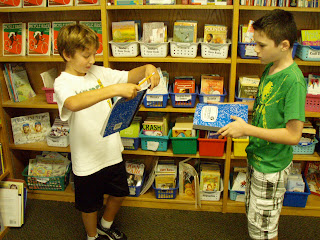
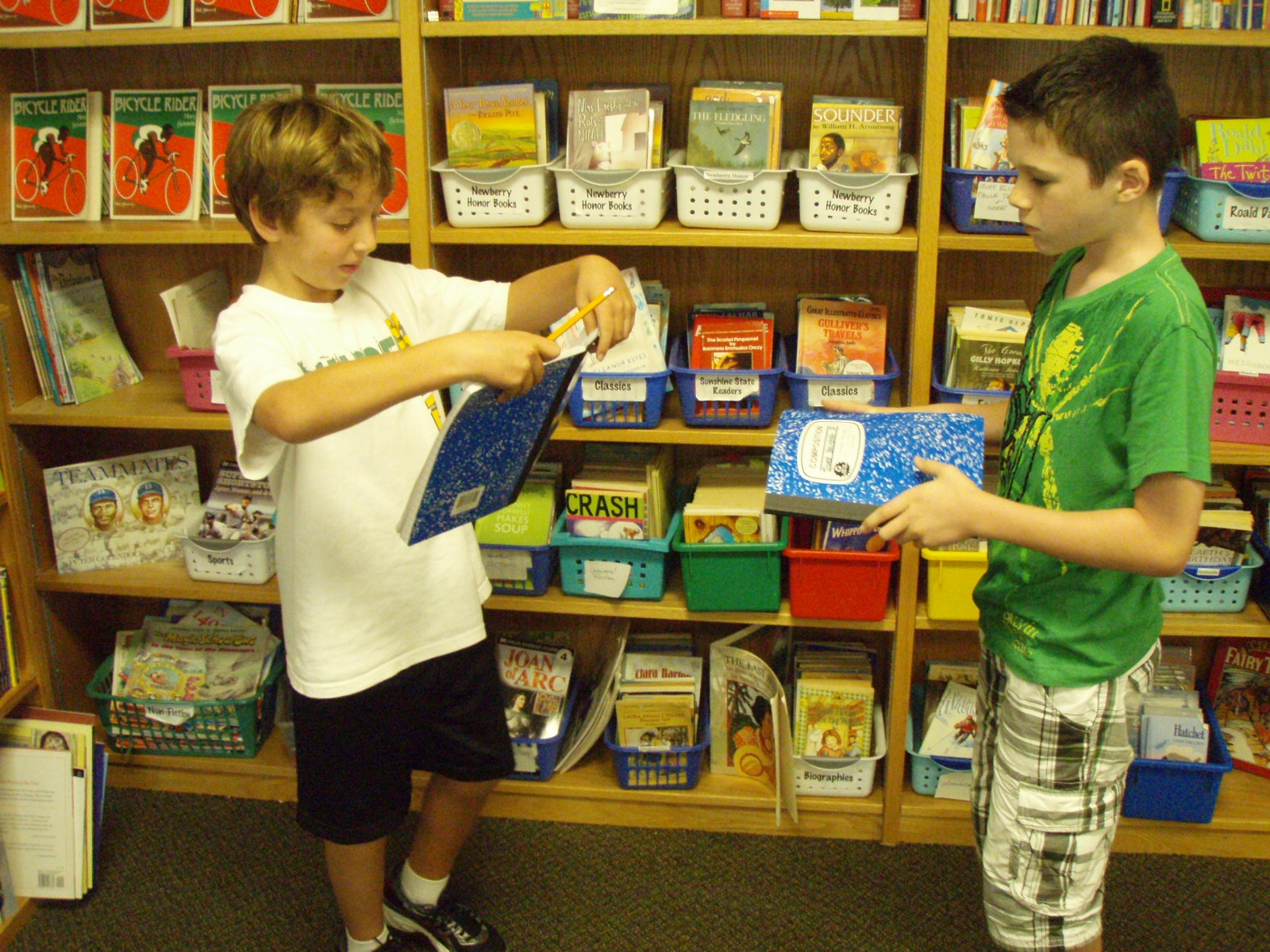
As you see from the photos below, students are already sharing with each other various things they've written. Writers read their latest efforts to one another. Each partner is expected to respond with positive encouragement and helpful hints.

Writers Workshop sets in motion a process of near daily writing experiences and lessons across the curriculum. Students will explore many genres of writing including: personal narrative, short fiction, persuasive essay, poetry, literary essay and historical fiction time permitting.

Writing sessions follow these steps. We begin with a mini lesson for the entire group in which I model (with my own writing or a piece of literature) something I want everyone to work on that period. Students write quietly at their desks for 20 to 3o minutes and frequently longer. During that time I move around and check on students progress and meet one on one with most. Later in the hour, students are encouraged to conference with their writing partners. These conferences feature each writer asking the other to explain what he or she is trying to accomplish with this particular piece of writing. This is when the helpful hints and encouragement are exchanged.

Students originally write in their journals. Second or third drafts are word processed and saved. Near the end of the process with any given piece of writing, students work from various checklists that assist them to improve their word choices, sentence variety, spelling, grammar, punctuation and voice.

Finally a piece is ready to be published. These final word processed pieces are analyzed by both student and teacher using the same rubric which has been specifically designed to evaluate each genre.

Sometime each trimester we hold a public reading/celebration in which our student-authors share their writings. These collected writings are "bound" in a permanent booklet with student designed cover art.

Students are working on several poems, a personal narrative and a piece of short fiction. They are also beginning to "journal" their reactions to the novel A Land Remembered which I am reading to them. This provides an introduction to an important first step in writing a literary essay.
Our writing year began with my wife giving an informal talk on her life as a writer. She shared her insight that all writers are readers, observers of human behavior and note takers.

Here's a list of the mini lessons the class has experienced thus far.
Writers are readers, observers and note takers
A writer’s life discussed
During Writer’s Workshop everyone writes and shares including the teacher.
Stories/writing ideas come from everywhere
Writing from a prompt: sticker story
Why writers cross out instead of erasing
Importance of sentence variety
Writer’s Workshop procedures reviewed
Writers read their writings to each other.
Writers compliment each other and offer helpful hints.
Writers ask, “What are you trying to do with this?”
Writers reflect on what: they’ve learned about, are pleased with and/or need to improve.
About conferencing with the teacher, editing and word processing
“The Important Book” poetry project
Introduction to praise poem (ode) writing: “an electrical device we can’t live without”
Literature helps us understand various genres of writing
Personal Narrative introduced: “TV and Me”
Brainstorming and listing possible first experiences or important small moments recalled
Difference between personal narrative and memoir
About “voice:” how to get your writing to “sound” like you…..(example: Connor’s personal narrative about remodeling his house.)
Special paragraphing when writing dialogue
Describing characters: add appearances, mannerisms and personality traits of people around you observe
Importance of planning (inspiration style webbing etc.) either before writing soon after starting; revising as you go along

Writers Workshop sets in motion a process of near daily writing experiences and lessons across the curriculum. Students will explore many genres of writing including: personal narrative, short fiction, persuasive essay, poetry, literary essay and historical fiction time permitting.

Writing sessions follow these steps. We begin with a mini lesson for the entire group in which I model (with my own writing or a piece of literature) something I want everyone to work on that period. Students write quietly at their desks for 20 to 3o minutes and frequently longer. During that time I move around and check on students progress and meet one on one with most. Later in the hour, students are encouraged to conference with their writing partners. These conferences feature each writer asking the other to explain what he or she is trying to accomplish with this particular piece of writing. This is when the helpful hints and encouragement are exchanged.

Students originally write in their journals. Second or third drafts are word processed and saved. Near the end of the process with any given piece of writing, students work from various checklists that assist them to improve their word choices, sentence variety, spelling, grammar, punctuation and voice.

Finally a piece is ready to be published. These final word processed pieces are analyzed by both student and teacher using the same rubric which has been specifically designed to evaluate each genre.

Sometime each trimester we hold a public reading/celebration in which our student-authors share their writings. These collected writings are "bound" in a permanent booklet with student designed cover art.

Students are working on several poems, a personal narrative and a piece of short fiction. They are also beginning to "journal" their reactions to the novel A Land Remembered which I am reading to them. This provides an introduction to an important first step in writing a literary essay.
Our writing year began with my wife giving an informal talk on her life as a writer. She shared her insight that all writers are readers, observers of human behavior and note takers.

Here's a list of the mini lessons the class has experienced thus far.
Writers are readers, observers and note takers
A writer’s life discussed
During Writer’s Workshop everyone writes and shares including the teacher.
Stories/writing ideas come from everywhere
Writing from a prompt: sticker story
Why writers cross out instead of erasing
Importance of sentence variety
Writer’s Workshop procedures reviewed
Writers read their writings to each other.
Writers compliment each other and offer helpful hints.
Writers ask, “What are you trying to do with this?”
Writers reflect on what: they’ve learned about, are pleased with and/or need to improve.
About conferencing with the teacher, editing and word processing
“The Important Book” poetry project
Introduction to praise poem (ode) writing: “an electrical device we can’t live without”
Literature helps us understand various genres of writing
Personal Narrative introduced: “TV and Me”
Brainstorming and listing possible first experiences or important small moments recalled
Difference between personal narrative and memoir
About “voice:” how to get your writing to “sound” like you…..(example: Connor’s personal narrative about remodeling his house.)
Special paragraphing when writing dialogue
Describing characters: add appearances, mannerisms and personality traits of people around you observe
Importance of planning (inspiration style webbing etc.) either before writing soon after starting; revising as you go along
Monday, August 30, 2010
The Week Ahead
Reading Comprehension
We will continue introducing the procedures for our daily reading lessons. This week students will learn how to complete reading comprehension skills and strategies response sheet and study cards. Complete instructions will be a part of each student's reading notebook. Students explore a new lesson in class each day and just like math have a home link activity to do in the evening.
Math
We will have lessons each day with home links in the evening that review each lesson.
History
We begin our study of how the 13 colonies were settled this week. We usually read and discuss the chapter in class. In the evening there's a reaction page to complete. The next day we go over the homework and share our responses. Students learn to take notes and explore the core concepts. Each response paper uses the same four categories: identity (who is this about); perspective (what did they believe, point of view); conflict (what problems did they face); and resolution (how did they resolve their problems; what changes came about.) We start with examining the same four questions for ourselves. We also examine Ameria as we know it now. How did we get to this?
Writing and Science projects and lessons previously explained continue weekly.
Sunday, August 29, 2010
Last Week Highlights
Science:
Last week we concentrating on launching our first science unit on electric circuits. Students set up their notebooks did 5 assignments and the first investigation.
Writing:
We also spent much time on establishing our writing workshop procedures and routines. Students have been working on: a fictional story about stickers, a praise poem about an electrical device they admire, another poem introducing the most important things about them and a personal narrative all about a strong memory from their past.
Reading Comprehension:
Students practiced reacting to selections from their reading book series "Voices." I also started the year long project reading the pioneer Florida novel "A Land Remembered." Students started taking notes and responding to the novel in their journals. Eventually they will attempt the first of series of literary essays inspired by this book and others.
Language Arts:
We started studying a list of vocabulary words from across the curriculum. Students will be expected to learn the meanings and spellings of these 23 words. We practice oral presentation skills and public speaking all year. This week we rehearsed a presentation for today's Town Meeting.
My Welcome Letter Returns

Will H. holds his welcome letter from me which contained a stamp from Taiwan. Each student received a different stamp. Everyone was encouraged to research their stamp's nation and return with some fun facts. Will found that the world's 2nd tallest building was in Taiwan. He included a drawing of it and the flag.
Classroom Library Looking Good

All classroom libraries have about $2000 worth of new books added over the summer. We have the latest and best books for readers this age. They are divided in several categories. Besides bins for favorite authors, there are sections for animals, science fiction, sports, mysteries etc. All of these books may be signed out and borrowed. Students read silently their independently chosen books for about 15 minutes on arrival each morning.
Subscribe to:
Posts (Atom)